Emma Orozco
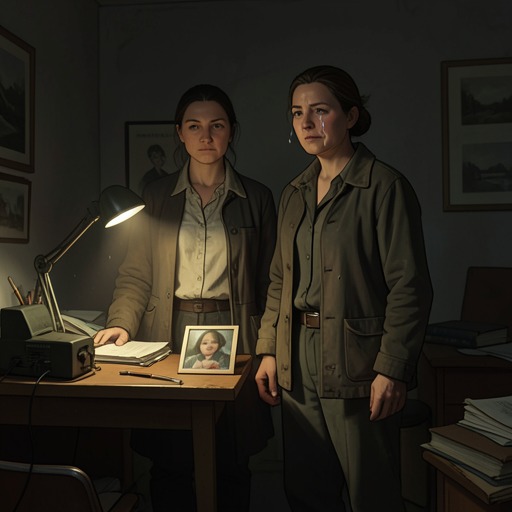
Day of the DeadEmma Orozco is the grieving mother of Roseanne Orozco, whose unsolved murder in 1970 has remained a defining loss for her family. Decades after the killing, Emma breaks a long silence and asks Brandon Walker to investigate. Her decision turns private mourning into a demand for answers, while her insistence on what she remembers brings family knowledge into conflict with an official record that appears incomplete.
Identity and Background
Emma first comes to Brandon’s attention through Fat Crack Ortiz, who suggests that she speak with him about her daughter. Elderly and reliant on a walker, she arrives at Brandon and Diana Ladd’s home accompanied by her son-in-law, who waits outside in his vehicle. When Brandon meets her in the living room, he initially mistakes her fixed gaze for an interest in the baskets. He then recognizes it as an expression of profound grief, one he associates with his own experience of loss.
Emma has two daughters: the elder, Andrea Tashquinth, and the younger, Roseanne Orozco. Her husband, Henry Orozco, had urged the family to put Roseanne’s death behind them, telling Emma that it was no good to dwell on the past. Emma waited until after Henry’s death to pursue the matter. She explains that she is Roseanne’s mother and wants to know what happened. Her decision is not presented as an easy departure from family history: she approaches a stranger, a white investigator, and a painful subject despite customs that make direct questioning and visible grief difficult.
Breaking the Silence
Emma tells Brandon that Roseanne was murdered in 1970 and that no one was caught. More than thirty years have passed, but the word remains hard for her to say. Brandon recognizes that her grief is not something time has removed; in his understanding, a child’s death can divide a parent’s life into a before and an after. His own loss helps him understand why Emma’s request carries more than routine interest in an old case.
Their conversation proceeds with restraint. Brandon knows that direct questions can be considered impolite among the Tohono O’odham, so instead of pressing Emma for details, he observes that she has waited a long time to speak. She responds by explaining why: Henry wanted the family to forget. Now that he is gone, Emma chooses to speak for herself. Brandon avoids looking directly at her as she talks, watching her reflection instead; he sees her grip the walker as though it might steady her resolve. When she asks whether Brandon belongs to a group that investigates old murders, he invites her to tell him about Roseanne.
Family Memory and a Failed Investigation
Emma’s account leads Brandon to Andrea Tashquinth, whose recollections supply important context for the investigation. Andrea describes Roseanne’s distress on her first day of school: after a principal carried the four-year-old to a dark coat closet, Roseanne stopped speaking. She never spoke again, including at home, and doctors could not identify a physical cause. Andrea also remembers that Roseanne was hospitalized for an appendectomy and later admitted for tests. When her father went to collect her after work, she had disappeared from the hospital. The family never saw her alive again; the following week, Roseanne’s body was found in an ice chest beside the road.
Andrea says that she tried to tell the authorities she thought the hospital was involved, but no one listened. She was sixteen, and investigators already suspected her father. Brandon understands the case as part of a wider failure of jurisdiction and resources. Because Roseanne was presumed to have been killed on the reservation by another Native person, the investigation fell to federal authorities or local tribal police, rather than the Pima County Sheriff’s Department. The Papago Tribal Police Force, also known as Law and Order, lacked training, equipment, and money; Brandon recalls that FBI investigations of reservation murders were often cursory. Emma’s family had been left with grief and unanswered questions while the systems responsible for investigating the death failed to produce a result.
Records, Suspicion, and Action
Brandon remembers that a study funded in part by Arizona State University had digitized health records from the hospital in Sells, including records dating back to the 1950s. The study tracked health and causes of death among the Tohono O’odham, but digitization did not guarantee that investigators could obtain access. Brandon expects the hospital to resist a request from him. He instead asks Emma to speak with Andrea about Roseanne’s admission and later visits Andrea at her home in Big Fields.
When Brandon returns to Emma, he tells her that Andrea remembered Roseanne’s hospitalization. Emma confirms the appendectomy. Later, after checking hospital material, she tells Brandon that Andrea is right: someone at the hospital was involved. The hospital has claimed that it has no admission record for Roseanne and suggested that records from so long ago may have been lost. Emma rejects that explanation because her own records were found. They show three admissions: for Andrea’s birth, Roseanne’s birth, and Emma’s hysterectomy fifteen years earlier. Her comparison turns the missing record from a vague archival problem into a specific reason for suspicion. Emma does not merely repeat her daughter’s story; she uses the evidence available to her to challenge the institution’s account.
Brandon considers exhuming the remains of Roseanne’s baby to establish the father’s identity. Emma gives him permission to proceed and offers to sign whatever papers are needed. Before formal permission can be obtained, however, she acts with her family. After dark, her son-in-law and grandson dig up the remains, and the next morning they bring them to Brandon wrapped in taped-together plastic garbage bags. Emma explains that seeking the tribal council’s permission would take too long. Her choice brings urgency and agency to the investigation, but it also creates a serious evidentiary problem: Brandon recognizes that the unauthorized exhumation compromises the chain of evidence. He is caught between the need to pursue answers for Roseanne’s family and the need for evidence that can support accountability in court.
Change and Significance
Emma’s defining change is from long-held silence to determined participation. She first comes to Brandon with a painful disclosure; she then helps pursue hospital records, trusts him to seek further evidence, and takes direct action when she believes procedure will delay the search. She asks that Roseanne’s killer be found even if he is dead, because she wants to know that he cannot do this again. Her purpose joins the need to understand the past with the protection of others.
The novel gives Emma’s knowledge weight even when official records do not. Andrea’s early warning was dismissed because of her age and because investigators focused on her father; Emma, in turn, recognizes that the hospital’s explanation does not fit the records it retained for her. The case advances when the family’s testimony is heard alongside the documents and investigative methods that had failed to resolve it before. At the same time, Emma’s unauthorized exhumation shows the cost of that failure: families seeking answers may act outside official procedures, while the resulting evidence becomes harder to use.
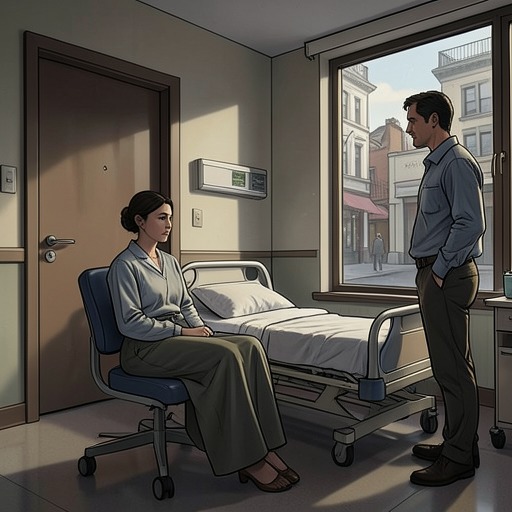
After Brandon suffers a heart attack and is in intensive care, Emma sends him a rosebud as thanks. Diana explains that Emma cannot visit because only relatives are allowed in the unit. Brandon asks Diana to tell Emma that both he and Fat Crack Ortiz welcome her gratitude. The small exchange closes their relationship on mutual recognition: Emma came seeking help for a daughter whose case had been abandoned, and Brandon acknowledges the connection and obligation created by her trust.